What Is the 30-30-30 Rule for Eyes?
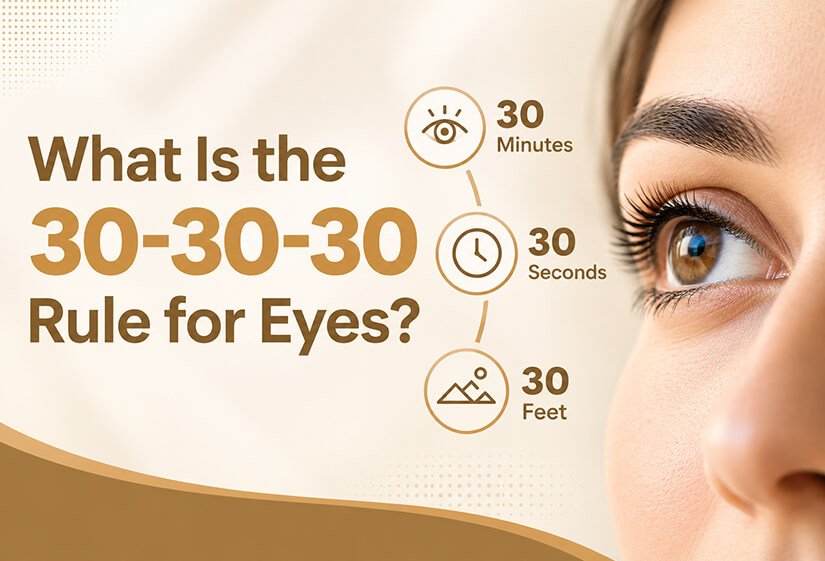
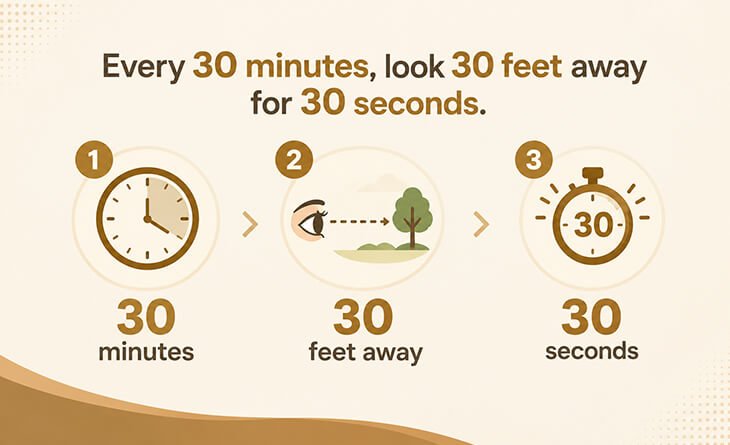
The 30-30-30 rule for eyes is a simple screen-break habit. Every 30 minutes, look at something about 30 feet (9 metres) away for 30 seconds. This short pause relaxes your focusing muscles and helps reduce digital eye strain from phones, laptops, and other screens.
Most of us now spend hours a day looking at screens for work, study, and entertainment. Our eyes were never built to stare at a close object for so long without a break. The 30-30-30 rule for eyes is an easy way to give them that break, and it takes only a few seconds each time.
What Does the 30-30-30 Rule for Eyes Mean?
The rule is built around three easy steps, and each one uses the number 30:
- Every 30 Minutes: stop and take a short break from your screen.
- Look 30 Feet Away: shift your focus to an object roughly 30 feet (about 9 metres) in the distance, such as a window view, a wall clock across the room, or a tree outside.
- For 30 Seconds: hold that distant focus for a full 30 seconds before going back to your screen.
You do not need a measuring tape. Any object far across the room or outside will do. A timer or a reminder app can help you build the habit until it feels automatic.
You may have also heard of the 20-20-20 rule, which asks you to look 20 feet away every 20 minutes for 20 seconds. Both follow the same idea: look far away often, so your eyes are not stuck on near work all day.
Why Does the 30-30-30 Rule Reduce Digital Eye Strain?
When you focus on a near screen, the tiny muscles inside your eyes stay tight to keep the image sharp. Hold that for hours and those muscles get tired, much like any muscle does. You also blink far less while staring at a screen, so your eyes can turn dry and gritty.
Looking into the distance lets those focusing muscles relax, and the natural break reminds you to blink. This is why the habit helps reduce digital eye strain, also called computer vision syndrome. Common signs of digital eye strain include:
- Tired Or Aching Eyes: a heavy, fatigued feeling after long screen use.
- Dry, Watery, Or Burning Eyes: often with redness or irritation.
- Blurred Vision: especially when switching focus between near and far.
- Headaches: along with neck, shoulder, or back ache from poor posture.
Does Looking at Screens Permanently Damage Your Eyes?
Here is the reassuring part. According to the American Academy of Ophthalmology, staring at screens does not cause permanent eye damage, and there is no strong evidence that screen light harms the eyes. Digital eye strain is real and uncomfortable, but the symptoms are temporary and usually settle once you rest your eyes. The 30-30-30 rule for eyes is a gentle way to prevent that discomfort before it builds up.
How to Make the 30-30-30 Rule Work Even Better
A few simple changes alongside the rule can protect your comfort further:
- Keep A Comfortable Distance: sit about an arm’s length, roughly 25 inches, from your screen.
- Blink More Often: blinking spreads tears and keeps the eye surface moist.
- Cut Down Glare: adjust brightness, soften harsh lighting, and clean your screen.
- Stay Hydrated: and use lubricating eye drops if your eyes feel dry.
- Correct Your Vision: an outdated glasses prescription can make strain worse.
When Should You See an Eye Doctor in Delhi?
The 30-30-30 rule for eyes helps with everyday screen comfort, but it is not a substitute for an eye check. If your eyes stay dry, sore, or blurry even after regular breaks, it is worth seeing an eye doctor in Delhi for a proper examination. Lingering strain can sometimes point to an uncorrected refractive error, dry eye disease, or another condition that needs treatment. A yearly eye exam is a sensible habit for anyone who spends long hours on screens.
When A 30-Second Break Is Not Enough
Screen breaks keep everyday strain at bay, but tired, dry, or blurry eyes that linger deserve a closer look. Dr Anisha Gupta offers thorough eye examinations and personalised care for screen-related strain and a wide range of eye conditions. Book your consultation with a trusted eye doctor in Delhi and see your world clearly and comfortably again.
Frequently Asked Questions
Both work on the same principle of resting your eyes by looking into the distance. The 20-20-20 rule is more widely recommended and asks for breaks more often. The best rule is the one you will actually follow every day.
No. The rule eases tiredness and helps reduce digital eye strain, but it does not correct refractive errors like short-sight or long-sight. For sharper vision, you may still need glasses, contact lenses, or a vision-correction procedure.
About 9 metres, roughly the length of a large room or the view out of a window. You do not need to measure it exactly. Any distant object well across the room or outside gives your eyes the rest they need.
It can help, because pausing reminds you to blink, which refreshes the tear film. If dryness continues despite regular breaks, an eye doctor in Delhi can check for dry eye disease and suggest treatment.