
Everything You Need to Know About CSR (Central Serous Retinopathy)
If you’ve ever noticed a blurry spot in your central vision or found that straight lines suddenly look distorted, you might be experiencing a condition called Central Serous Retinopathy (CSR). It’s not as widely known as cataracts or glaucoma, yet it’s one of the leading causes of temporary central vision loss in young and middle-aged adults, especially those under stress.
Central Serous Retinopathy treatment can restore clear vision in most cases when diagnosed early. Let’s explore what CSR is, what causes it, how it feels, and how doctors treat it.
What Is Central Serous Retinopathy?
Your retina is the light-sensitive layer at the back of your eye that helps form visual images. In the centre lies a small but vital area called the macula, responsible for sharp, detailed vision.
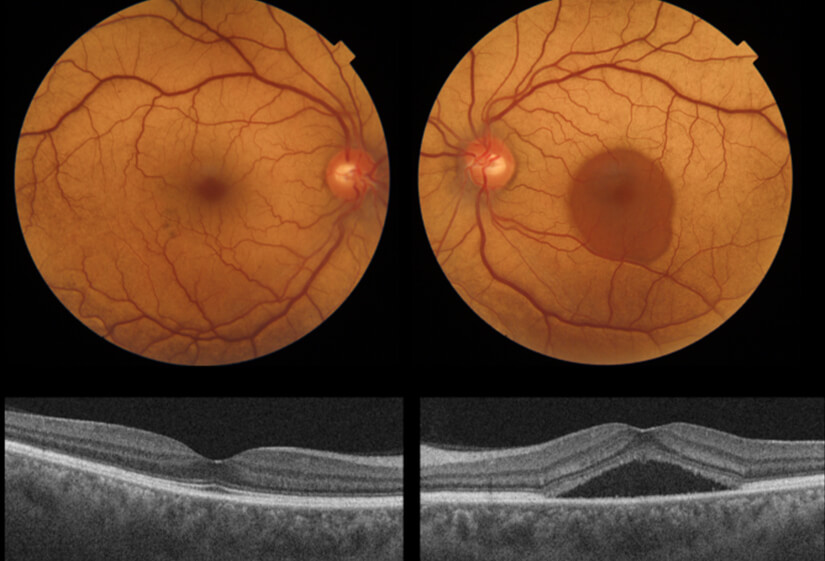
In Central Serous Retinopathy, a small leak develops under the retina, allowing fluid to collect beneath the macula. This buildup lifts the retina slightly from its normal position, causing blurred or distorted vision.
Most people notice that one eye seems slightly dimmer or hazier than the other. They might also see straight lines appear bent or have trouble reading fine print. The good news is that Central Serous Retinopathy treatment is usually effective, especially when started promptly.
What Causes Central Serous Retinopathy?
There isn’t a single cause, but doctors know several risk factors that make CSR more likely. These causes of Central Serous Retinopathy often have one thing in common: stress.
- Chronic stress and high cortisol levels: The stress hormone can affect blood vessels in the eye, making them leaky.
- Use of steroids: Medications containing corticosteroids, used for asthma, allergies, or skin conditions can trigger CSR.
- Sleep deprivation: Poor sleep affects the body’s hormonal balance, contributing to fluid buildup.
- Type A personality: People who are driven, anxious, or constantly under pressure tend to experience CSR more often.
- Hypertension and heart disease: Circulatory changes can play a role.
Men between 30 and 50 are statistically more prone, but it can occur in anyone. Managing these Central Serous Retinopathy causes is an important part of preventing recurrence.
Symptoms to Watch For that Can Lead to Central Serous Retinopathy
CSR doesn’t usually cause pain, which can make it easy to overlook at first. Common symptoms include:
- Blurred or dim vision in one eye
- A grey-yellow or dark spot in the centre of vision
- Straight lines appearing wavy or distorted
- Difficulty recognising faces
- Colours appearing dull or washed out
If you experience these changes, visit an eye hospital in Delhi immediately. Early detection helps your ophthalmologist confirm whether it’s Central Serous Retinopathy or another retinal condition.
How Doctors Diagnose Central Serous Retinopathy
Diagnosis begins with a comprehensive eye exam. The eye hospital in Delhi may use several specialised tests:
- Optical Coherence Tomography (OCT): Creates a detailed image of the retina to detect fluid buildup.
- Fluorescein Angiography: A harmless dye highlights any leakage points in retinal blood vessels.
- Visual Acuity and Amsler Grid Tests: Check for distortion or missing spots in central vision.
These diagnostic tools not only confirm CSR but also guide the right Central Serous Retinopathy Treatment approach.
Treatment Options for Central Serous Retinopathy
In most cases, CSR resolves on its own within 2–3 months. The fluid beneath the retina naturally reabsorbs, and vision returns to normal. During this phase, your eye hospital in Delhi may simply monitor progress with regular scans.
However, if fluid persists or keeps recurring, active Central Serous Retinopathy Treatment is required. Common options include:
- Lifestyle changes: Stress reduction, good sleep, and avoiding steroid medication unless medically necessary.
- Medication: Tablets that reduce cortisol levels or improve retinal circulation.
- Thermal laser treatment: Used selectively when the leak is away from the central macula.
- Photodynamic therapy (PDT): A mild laser treatment that seals the leak without damaging the retina.
- Anti-VEGF injections: In some cases, Intravitreal anti-VEGf injections are also helpful
The right combination depends on the severity and the underlying causes of Central Serous Retinopathy.
Long-Term Outlook
Most patients recover fully, but recurrence can happen if triggers like stress or steroid use aren’t controlled. Regular follow-ups with an eye hospital in Delhi are essential. Over time, repeated episodes may cause slight thinning or scarring of the retina, which can affect fine detail vision.
To reduce risk, maintain a balanced lifestyle, manage stress levels, and protect your eyes from strain and fatigue. Early detection and proactive Central Serous Retinopathy treatment make a major difference in visual outcomes.
Living with CSR: Emotional and Practical Tips
Living with blurred or distorted vision can feel frustrating, especially for those who depend heavily on visual tasks like reading, driving, or computer work. It’s important to remember that CSR often improves with time and care.
Simple practices such as taking screen breaks, meditating, using proper lighting, and staying hydrated can help the healing process. Many patients also find comfort in speaking with their eye hospital in Delhi team about progress, as reassurance itself reduces stress, the very factor that contributes to CSR.
Take Control of Your Eye Health with Dr Anisha Gupta
If you’re experiencing sudden blurriness, dark spots, or distortion in your central vision, don’t wait for it to pass. Dr Anisha Gupta, a trusted eye specialist at a leading eye hospital in Delhi, provides advanced diagnosis and personalised treatment for Central Serous Retinopathy tailored to each patient’s needs.
Her approach focuses on both medical precision and holistic recovery, addressing not just the eyes but also the lifestyle factors that contribute to Central Serous Retinopathy. Book your appointment today and take the first step toward restoring your vision clarity and peace of mind.
Frequently Asked Questions (FAQs) Central Serous Retinopathy
Yes, prolonged emotional stress increases cortisol levels, which can affect the retinal blood vessels and lead to CSR.
In CSR, only a small part of the retina lifts due to fluid, while retinal detachment involves the complete separation of the retina from the back wall of the eye, a more serious condition.
While CSR usually affects one eye, it can sometimes occur in both, either simultaneously or at different times.
Yes, light to moderate activities are generally safe, but avoid excessive strain, stress, or heavy lifting until your Central Serous Retinopathy treatment is complete.
Most patients recover full vision. However, if fluid persists for many months or recurs frequently, some central vision distortion may remain.
A diet rich in leafy greens, antioxidants, omega-3 fatty acids, and low in caffeine and alcohol supports overall retinal health and may help prevent recurrence.
Your doctor will usually schedule check-ups every 4–6 weeks until the fluid completely resolves, then once every six months to monitor stability.
